k7k7 Asia Cup Cricket Betting: which market to use while the ball is in play
Tournament format, the rules behind six familiar markets, the maths of reading live odds and the steps to fill a slip — all gathered in one place.
18+ · Responsible Gaming
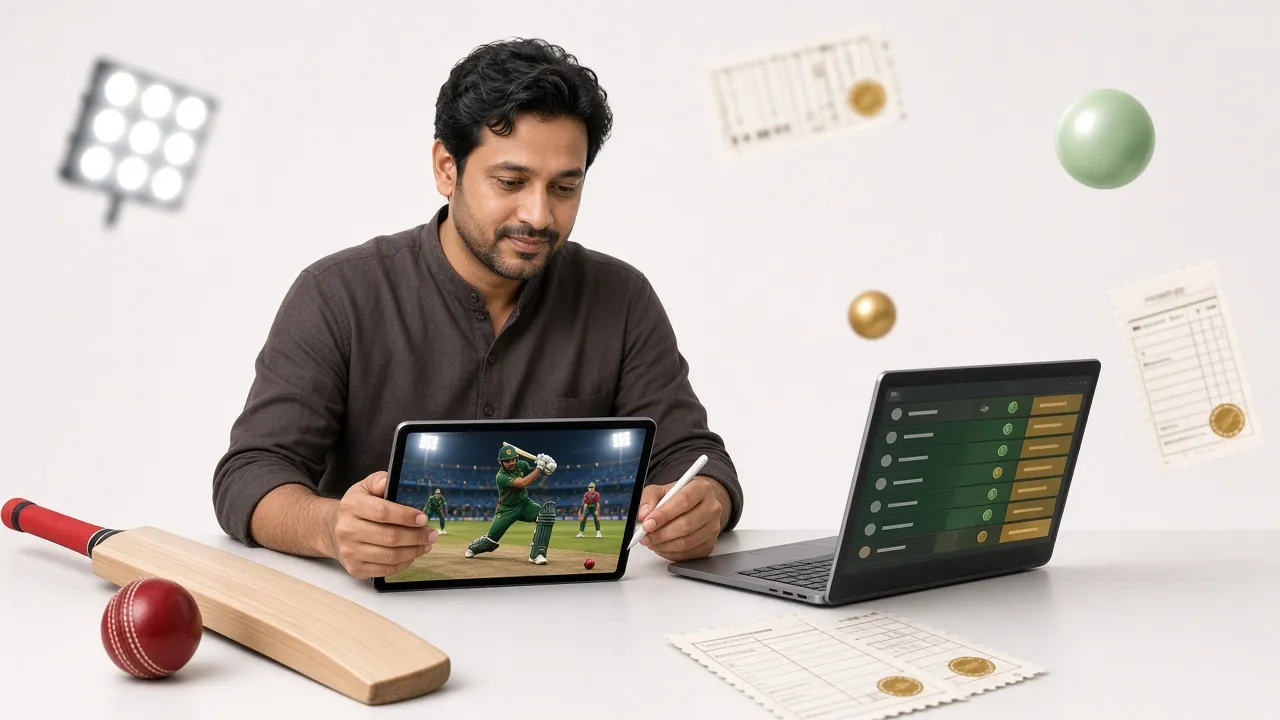
Know the Asia Cup: formats change, the teams barely do
The Asia Cup is an international cricket tournament played between Asia's national teams, run under the Asian Cricket Council. Bangladesh plays in it regularly, so besides watching on TV, betting on match results heats up too. On k7k7, markets stay open on every match of the tournament, both before the game and while the ball is rolling.
Two formats: ODI and T20. ODIs are 50 overs, T20s are 20 overs. Which format runs in which edition is set by the hosts and the international calendar, and the rules change when the edition changes. Knowing which format is being played makes your numbers easier to line up when you pick a market.
In ODIs the innings is long, so the run line moves slowly and then jumps in the last ten overs. In T20 the equation changes every over, and odds swing fast on wickets and sixes. If you are comfortable deciding quickly, the shorter format's markets work better for you.
Usually the host team, India, Pakistan, Sri Lanka, Bangladesh, Afghanistan and one side that comes through qualifying take part; the number of teams shifts by edition. Matches are often played at neutral venues. So don't lock in a result on home advantage alone — look at form and conditions.
The tournament has no fixed month. It usually lands in the middle to later part of the year, in the gaps between other series. So check the match schedule in the app, so you don't miss the window when markets open.
Six markets, their rules, and who each one suits
The table below covers the six main markets of a match. See at a glance how each one settles, how much of a calculating head it needs, and who picks it up easily. If you are new, start with the match result.
| Market | How it settles | Difficulty | Suits |
|---|---|---|---|
| Match result | The team with more runs on the board when the scheduled overs are done wins. A tie or no result settles under the market rules. | Low | Those who can read a team's rhythm by watching the game |
| Runs over/under | You have to call whether the combined runs of both teams finish above or below a line set in advance. | Medium | Those who like working with numbers |
| Top run scorer | Who will score the most runs in the match — that is the bet. If runs are level, settlement follows the rules. | Medium | Those who track player form |
| Top wicket taker | You have to pick who takes the most wickets in the match. If players are tied at the top, the market settles under separate rules. | Medium | Those who know the difference between pace and spin |
| Champion bet | The bet wins with the team that becomes champion once the final of the whole tournament is done. | Low, but it takes time | Those who don't want to bet match after match |
| Live markets | Odds shift while the ball is in play; you back events like a single over, the next wicket, or runs in a set number of overs. | High | Those who can decide fast |
Match result
This feels like the lowest risk here, since you are backing the result of the whole match. Decide after looking at the pitch, the toss and the team selection. Experience of handling pressure in knockout games also counts. Favourites lose too, so keep your stake small.
Runs over/under
A bet on the combined runs of both teams. In ODIs the line is usually higher, in T20 lower. The line is fixed before the match starts and keeps moving in-play as the ball is bowled. First thing, check whether the pitch is dry or damp.
Top run scorer
Saying in advance who will score the most in an innings is hard, because a lot is decided by the batting order. Openers get more chances, but early wickets shuffle the order. Go by the form of the top order.
Top wicket taker
Whether the pacers or the spinners take more wickets depends on the pitch. In T20 bowlers send down fewer overs, so one spell can make the difference. Those who regularly bowl the first over have a better chance.
Champion bet
You can place one bet and hold it for the whole tournament, and the odds move slowly. Judge a team by how settled its squad is and how tough the group stage looks. Long-term bets tie your money up for many days, so keep the amount small.
Live markets
Odds change with every ball, so you have to decide fast. After a wicket falls or a big shot is hit, prices swing suddenly. Don't rush at that moment — wait until the market reopens, then look at the new price and fill your slip. If you want to bet while watching the match, the mobile app is the handiest way.
You put ৳১,০০০ on the match result market at ১.৮৫ decimal odds. If it wins, the total return is ৳১,০০০ × ১.৮৫ = ৳১,৮৫০, so your profit is ৳৮৫০. If it loses, the full ৳১,০০০ is gone. The ১.৮৫ here is only an example — real odds change with the match and the time.
৳১,০০০ × ১.৮৫ = ৳১,৮৫০
How to read decimal odds
Decimal odds tell you how much comes back in total for every taka you stake if the bet wins. ১.৮৫ means ১ taka ৮৫ poisha back on each taka. The lower the odds, the more likely the win is thought to be, but the smaller the profit.
The smaller in-match markets: innings, overs and partnerships
Besides the match result, you can bet on what happens inside the match. The five markets below are less familiar to newcomers, but once you know the rules the maths gets simple.
| Market | How it settles | Difficulty |
|---|---|---|
| Total innings runs | It settles on whether a team's total at the end of its innings finishes above or below the line. | Medium |
| Runs in the first ১০ overs | You back whether the score after the first ten overs ends above or below the line. | Medium |
| Highest partnership | It hinges on whether one pair puts on the biggest stand of the match. | High |
| Number of sixes | The bet is whether the two teams' combined sixes land above or below the set line. | Medium |
| A named batter's run line | It settles on whether a batter can get past the set run mark. | High |
These markets settle as soon as the innings ends, so you don't wait for the final result. What happens if rain shortens the innings or the match is abandoned is written into the rules of each market, so read that once before you fill a slip.
Four steps to filling a slip on k7k7, plus single vs combo
Once you understand the markets the job is easy. A slip comes together in the four steps below, and checking your amount once at each step cuts down mistakes.
-
Pick the match
Go into the tournament section and pick the match that is running now or starts later. Checking the format and venue helps you read the markets.
-
Choose the market and the line
Decide which market you're backing and check the odds. In live play the odds move every ball, and the price written on your slip is the one that stands.
-
Enter your stake
Enter an amount you could lose without it squeezing your everyday spending. You can start with a first deposit of just ৳২৫০, so get used to it with small stakes.
-
Check it before you confirm
Run through the match, market, stake and potential return one more time. A slip can't be cancelled once you confirm it — if you got something wrong, you have to fill a new one.
One bet or several
Backing only one market is a single, and that one outcome settles the slip. Joining two or more bets together is a combo, where every leg has to come in, but the odds multiply and grow bigger.
Conflicting markets on the same match can't go into one combo, and joining markets from the same match pushes the odds down. If greed gets you to six or seven legs, one miss sinks the whole slip, so newcomers are better off keeping combos to two or three.
Knowing these terms makes a slip easier to read
If you don't know what the terms in the table mean, your calculations can go wrong. Six terms are explained in one sentence each below.
Decimal Odds
This is the total amount you get back if your stake wins. For example, ১.৮৫ means that for every ১ taka staked, you get back ১.৮৫ taka.
Total Runs Line
This is the total runs figure you bet over or under. The line is higher in ODIs and lower in T20s.
Handicap
One team is given a head start in runs or wickets so that both sides are closer in price.
Void
If rain, no result or abandonment happens, the market is cancelled. Your stake is returned, with no profit or loss.
Combo Odds
Combining several bets multiplies their odds. Winnings are bigger, but every leg must win.
Rollover
Bonus money must be wagered a set number of times before it can be withdrawn. Here the rollover is 24x, with 7 days to complete it.
What many people think vs. what actually happens
During tournaments, rumours spread fast. Check the written rules instead of relying on hearsay. That will reduce wrong expectations.
| What many people think | What actually happens |
|---|---|
| If you back the favourite, you can't lose | Favourites have lower odds, so returns are lower too. Toss, pitch and conditions can turn a match at any time. |
| After losing several times in a row, it's time for a win | Each match is a separate event. Previous results don't change the chances of the next one. Raising your stake to recover losses is the biggest mistake. |
| The later you bet live, the surer your profit | Waiting longer may lower the price as the odds move, and a single wicket can flip the outcome. Check the line before you decide. |
| Bonus money can be withdrawn straight away | Before bonus money can be withdrawn, you must complete the 24x rollover within 7 days. Withdrawal is only possible once the conditions are met. |
| Adding more legs to a combo always means bigger profit | More legs mean more risk. One wrong market can lose the whole slip. Keeping to two legs or fewer is safer. |
Keep your own records. Writing down deposits, withdrawals and the amount of each slip makes it clear where you are spending the most. Before the match, check the rules for deposits and withdrawals in the k7k7 Deposit Guide and the withdrawal process.
What to know before the match
What's the difference between ODI and T20 markets?
An ODI innings is 50 overs, so run lines are higher and change quickly near the end. In a T20, the match ends in 20 overs, and odds move more with each wicket. If you bet on runs over/under in short formats, check the line before the game starts.
When can I place live bets on k7k7?
Markets stay open while the ball is in play, but they may pause for a few seconds after a wicket or a big shot. Odds are then reset. Filling your slip once the price is fixed reduces the hassle of unexpected changes.
How do I calculate returns?
Multiply your stake by the odds. A ৳১,০০০ stake at ১.৮৫ odds gives a total return of ৳১,৮৫০, with a profit of ৳৮৫০. This is only an example. Actual odds change with the match and timing.
What do I get on my first deposit, and what are the conditions?
Your first deposit gets a ১৫৫% bonus, up to ৳২০,৫০০. The minimum deposit is ৳২৫০, the rollover is 24x, and the bonus is valid for 7 days. The terms list which games and markets the bonus applies to. The minimum withdrawal is ৳১,৪০০.
How long do payments and withdrawals take?
You can deposit via bKash, Nagad, Rocket, Upay or bank transfer. Deposits usually arrive within 5 minutes, and withdrawals are processed in 3 minutes. Your first withdrawal requires identity documents, and checks can take up to 2 hours.
Can I bet on my phone while watching the match?
Yes, the k7k7 Android app shows match markets and scores together. The file is 45 MB, requires Android 6.0 or later, and is free. Download steps are on the app page.
Get your account ready before the first ball
After you register, you can deposit from ৳250 and check the markets before the match starts. If the lines change on match night, prepare your slip in advance so you don't miss out.